
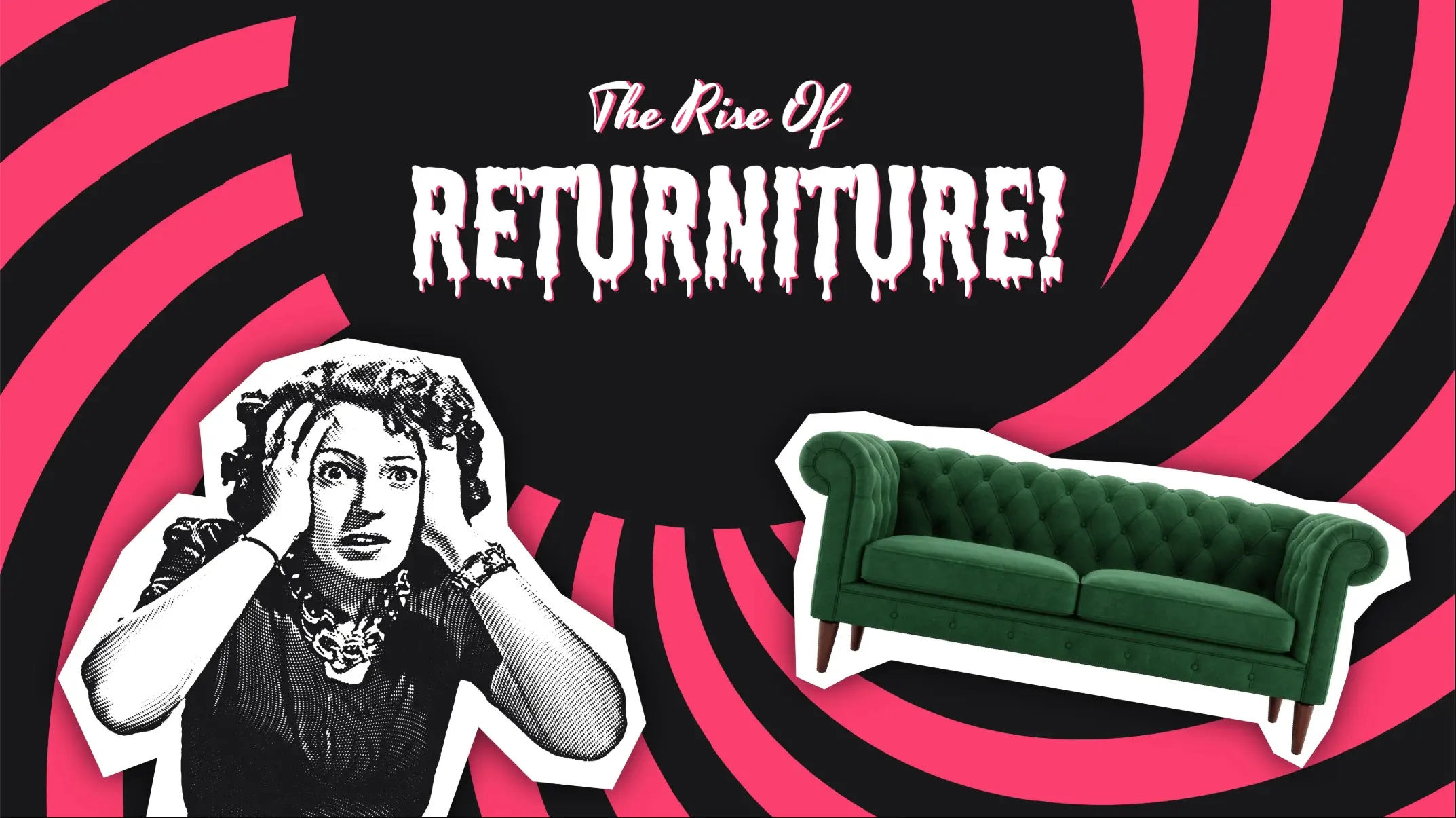

Every retailer has their own operational chaos caused by returns. But in furniture and home improvement, the phenomenon now has a name: Returniture. And according to a latest independent study of 1,500 consumers, it’s accelerating faster than many brands realise.
Nearly a quarter of UK shoppers (23%) have returned large furniture items in the last two years, and 73% say that’s “just how online shopping works.” Among Gen Z, that figure jumps dramatically: 31% are sending back full-scale items like sofas, beds and tables, with more than half believing this behaviour is entirely normal.
This isn’t a fringe behaviour. It’s a reshaping of customer expectations.
And while social media plays its part, platforms like TikTok fuel trend-cycling and “try-for-the-aesthetic” experimentation, a large proportion of returns aren’t driven by mood, but by mismatched expectations. People aren’t just trying looks; they’re sending products back because what arrived simply wasn’t what they thought they were buying.
This is where Returniture becomes a product content problem. And why visual commerce has moved from “nice to have” to a commercial necessity.
This is no more true than in furniture, bathrooms, kitchens and home improvement retail brands where product pages need to work harder than others to give the visual confidence to click buy.
The Real Reason Customers Send Items Back? They Never Truly Saw Them in the First Place
From our research across 1,500 consumers, three frustrations stood out, and they’re strikingly consistent across categories:
-
Delivered items not looking as expected (43%)
-
Product photos not giving a true sense of the item (37%)
-
Confusion over product dimensions or scale (29%)
These aren’t “post-purchase behaviours.” These are pre-purchase failures. And they’re entirely preventable.
When your customer can’t properly visualize size, scale, proportions, finishes or context, you’re effectively asking them to guess. And guesses lead to returns, whether that’s a sofa that won’t fit through the front door, a tap that looks a different color tone in real life, or the armchair that visually dominates a room when the PDP images suggested otherwise.
Our study found that:
-
60% of Brits have bought furniture online that turned out to be the wrong size
-
49% ordered items that simply couldn’t get through the door or up the stairs
These aren’t shopper mistakes. These are content gaps.
Static photography, however beautiful it is, cannot solve scale confusion. It cannot communicate depth, texture, dimensionality or realism in the way today’s digital-first shopper expects.
Meanwhile, the burden of these mismatches sits entirely on the retailer. 69% of shoppers think retailers should pick up the bill for returns, whether justified or not. And for large, logistically complex categories like furniture and bathrooms, each return eats profit, time and operational bandwidth.
Returniture Isn’t Just a Cost Problem. It’s a Confidence Problem.
Something important is happening in shopper psychology.
Yes, consumers today have greater choice. Yes, social media compresses trends, raises aesthetic expectations, and drives redecoration cycles. But beneath all of that, something more fundamental has shifted:
Shoppers are overwhelmed, not under-informed. They have options, but not clarity. And choice without confidence is paralysis.
This is where the Returniture data becomes especially relevant.
Almost half of shoppers (47%) say that 3D tools, 360° product spins, and AR viewers would help them buy with more confidence. And retailers who have adopted these tools have reported up to 70% reductions in returns.
This aligns with the sentiment from our customer base too: when buyers can explore every angle, understand materials, compare combinations, or drop the item directly into their own room, the entire emotional calculus changes.
Confidence increases. Uncertainty decreases. Conversions improve. Returns fall.
This is the shift from imagining a product to actually seeing it.
And in 2026 and beyond, this will no longer be a competitive advantage. It’s becoming operational excellence.
Static Imagery Can’t Keep Up… But Visual Commerce Can
If a shopper can’t trust what they see pre-purchase, everything that follows becomes more expensive:
-
Customer service queries increase.
-
Delivery and reverse logistics costs rise.
-
Stock becomes tied up in transit.
-
Margin gets eaten alive.
-
And brand perception erodes, especially among younger buyers who already treat homeware like fast fashion.
Visual commerce solves this at the root.
360° Product Spins
Give customers realism, dimensionality, and the ability to understand the product as an object, not a photograph.
Discover the Fixtuur Visual Content Pack for 360° spins
3D Product Configurators
Let shoppers explore variations, textures, colors and build confidence in the exact product they’re choosing.
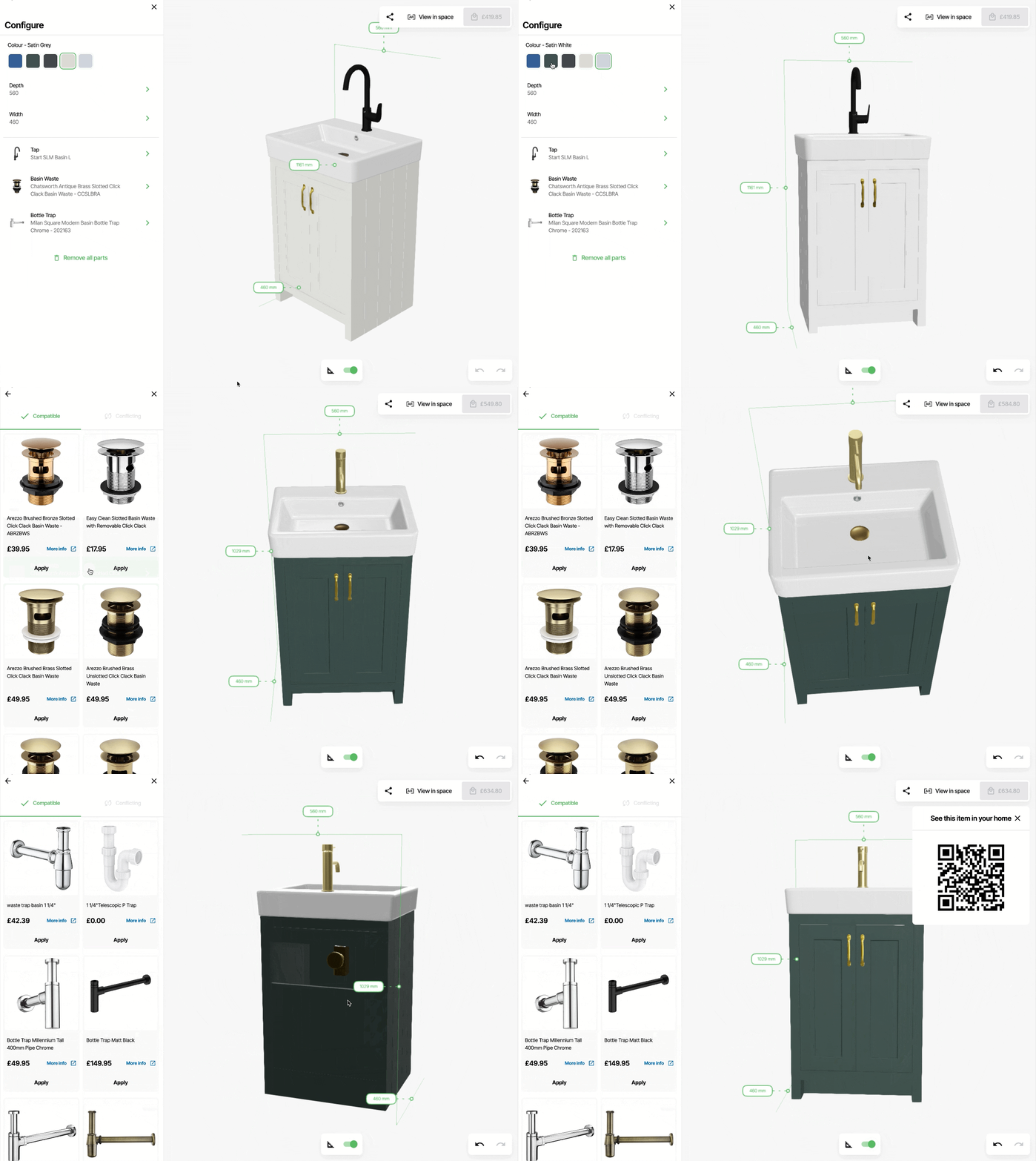
Discover the Fixtuur 3D Configurator to build visual
confidence
Room Planners & Multi-Product Visualisation
This is particularly critical in furniture, bathrooms and home improvement, where compatibility between items matters. Shoppers need to see taps with basins, sofas with side tables, wardrobes with flooring, and room flow - not item-by-item isolation.
![Fixtuur Bathroom Planner 1 [FA]](../../hs-fs/hubfs/Sales%20Email%20Images%2bGIFs%202025/Product%20GIFs/Bathroom%20Planner%20GIFs/Fixtuur%20Bathroom%20Planner%201%20%5bFA%5d5bfd.gif?width=572&height=425&name=Fixtuur%20Bathroom%20Planner%201%20%5BFA%5D.gif)
Discover the Fixtuur 3D Room Planner for elevated
experiences
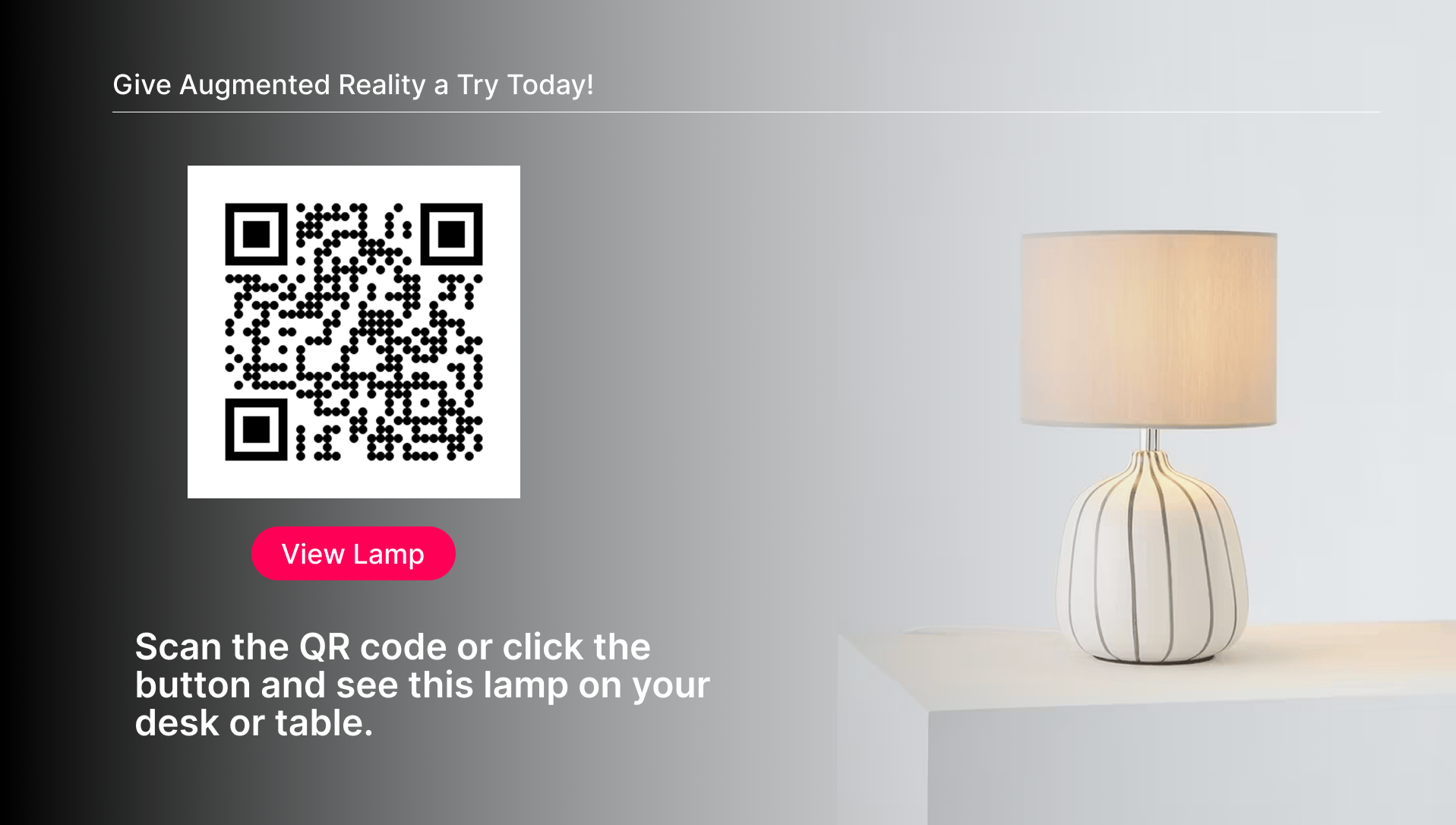
Web-Based AR
Bring the product into the customer’s home instantly. No apps. No friction. Just reality meeting intent.
Once shoppers have both choice and certainty, something powerful happens: they stop treating purchases as experiments, and Returniture begins to fall.
Returniture Is a Symptom. Visual Commerce Is the Cure.
The conversation many retailers are having today is about who pays for returns, how to enforce restocking fees, or how to streamline reverse logistics.
Important discussions, but none of them address the root cause.
Returniture isn’t inevitable. It’s a signal. A sign that shoppers need more clarity, richer information, and higher fidelity product experiences.
If you want to explore what visual commerce could look like for your product categories, from the creation of 3D models and CGI, to AR, to full 3D room planning, Fixtuur’s Returniture study is the perfect starting point. See the full report, the data, and the strategic implications for retailers at fixtuur.com/returniture.